
If your Jeep Grand Cherokee won’t start, the issue may stem from the ignition system or battery. Common causes include a dead battery, faulty ignition switch, or starter motor failure. Troubleshooting these components can help identify and resolve the problem efficiently.
Jeep Grand Cherokee Ignition Issue Symptoms
When your Jeep Grand Cherokee refuses to start, it can be frustrating and concerning. Understanding the symptoms associated with ignition issues is crucial for diagnosing the problem effectively. This section outlines common signs that may indicate an underlying ignition malfunction, helping you pinpoint the cause of your vehicle’s starting troubles.
This table summarizes common symptoms, primary suspects, and difficulty levels for diagnosing starting issues in a Jeep Grand Cherokee.
| Symptom | Primary Suspect | Difficulty (1-5) |
|---|---|---|
| No response to key | Dead battery | 2 |
| Clicking sound | Faulty starter motor | 3 |
| Dashboard lights off | Ignition switch failure | 4 |
| Engine cranks slowly | Weak battery or cables | 3 |
Ignition System Failure Analysis
If your Jeep Grand Cherokee refuses to start, the ignition system may be the culprit. Understanding the components and potential failures within this critical system can help pinpoint the issue. This analysis will guide you through common problems that could be preventing your vehicle from starting smoothly.
Identifying the root cause of ignition failures is critical for effective troubleshooting. Each component in the ignition system plays a crucial role in starting the vehicle. Common issues include:
Battery: A weak or dead battery is often the first suspect. Check for corrosion on terminals and test the battery voltage.
Ignition Switch: A faulty ignition switch can prevent power from reaching the starter. Testing the switch for continuity can reveal issues.
Starter Motor: A malfunctioning starter motor may produce a clicking sound or fail to engage. Inspect the motor and its connections.
Step-by-Step Fix for Ignition Problems
If your Jeep Grand Cherokee won’t start, it can be frustrating and concerning. This section provides a detailed, step-by-step guide to help you troubleshoot common ignition problems, ensuring you can identify and resolve the issue effectively. Whether it’s a dead battery or a faulty ignition switch, follow these instructions to get back on the road.
Follow these steps to diagnose and fix ignition issues in your Jeep Grand Cherokee.
Check the Battery
Inspect battery terminals for corrosion.
Test battery voltage with a multimeter. Replace if below 12.4 volts.
Examine the Ignition Switch
Remove the ignition switch cover.
Test for continuity using a multimeter. Replace if faulty.
Inspect the Starter Motor
Locate the starter motor under the vehicle.
Check connections for tightness and corrosion.
Test the motor by bypassing the ignition switch.
Evaluate Wiring and Fuses
Inspect wiring for frays or breaks.
Check fuses related to the ignition system. Replace any blown fuses.
Jeep Grand Cherokee Ignition Symptoms
When your Jeep Grand Cherokee refuses to start, it can be frustrating and concerning. Understanding the various ignition symptoms can help pinpoint the issue and guide you toward a solution. This section explores common signs that indicate potential ignition problems in your vehicle.
Understanding the symptoms can help you pinpoint the problem. Here are some common signs to watch for:
No Crank: If turning the key results in no sound, the battery or ignition switch may be at fault.
Clicking Noise: A clicking sound often indicates a weak battery or starter motor issue.
Dashboard Lights: If dashboard lights do not illuminate, it could signify a dead battery or ignition switch failure.
Essential Tools for Jeep Ignition Issues
When facing ignition issues with your Jeep Grand Cherokee, having the right tools can make all the difference in diagnosing and resolving the problem. This section outlines the essential equipment you’ll need to effectively troubleshoot your vehicle’s starting issues, ensuring a more efficient repair process. Understanding these tools will empower you to tackle ignition challenges with confidence.
Gathering the right tools and supplies can streamline the troubleshooting process. Here’s a checklist:
Multimeter: For testing battery voltage and continuity.
Wrenches: To tighten or remove battery terminals and starter connections.
Screwdrivers: For accessing the ignition switch and starter motor.
Replacement Parts: Keep a spare battery, ignition switch, and starter motor on hand for quick replacements.
Recommended Products

Compatible with Jeep Grand Cherokee 1999-2004

Make Sure Fit: Jeep 2012-2017 Wrangler 3.6L Grand Cherokee, 2014-2020 Ram 1500 /ProMaster 3.6L, Grand Caravan Charger Town & Country Routan. Replace 5149168AH, 5149168AI, 5149168AJ, 55000827AB, 7B0905715C, 7B0905715F. Please Use Amazon Part Finder (above the product title) to verify your Application
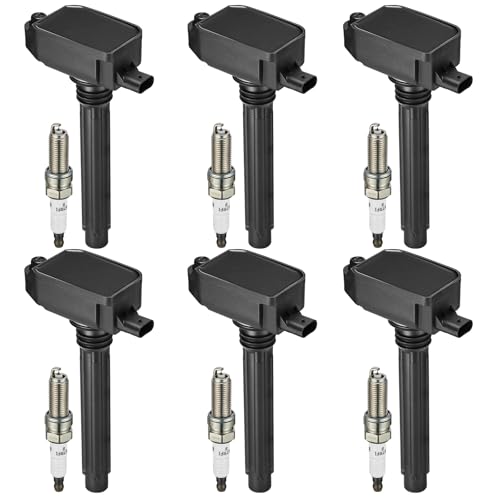
【 IGNITION COILS & SPARK PLUGS DIRECT FIT 】 Fully compatible with 3.6L V6 engines: for Dodge Durango (2016-2018), for Jeep Grand Cherokee (2016-2018), for Jeep Wrangler (2018), for Chrysler Pacifica (2017-2018), for Ram 1500 (2019). Please double-check your vehicle year, engine size, and OE numbers before ordering—if you are unsure about these ignition coils, simply message us your VIN and we will verify fitment within hours.
Ignition Troubleshooting Safety Guidelines
When facing ignition issues with your Jeep Grand Cherokee, safety should always be your top priority. Understanding the proper safety guidelines can help prevent accidents and ensure a smoother troubleshooting process. This section outlines essential precautions to take before diving into ignition diagnostics and repairs.
Always prioritize safety when working on your vehicle. Follow these precautions:
Disconnect Battery: Always disconnect the negative terminal before starting work.
Wear Safety Gear: Use gloves and safety glasses to protect against electrical hazards.
Work in a Ventilated Area: Ensure proper ventilation to avoid inhaling fumes.
Professional Help for Jeep Ignition Issues
If your Jeep Grand Cherokee still won’t start after following these troubleshooting steps, consider consulting a professional mechanic. They can perform a thorough diagnostic to identify deeper issues in the ignition system or electrical components. Regular maintenance can prevent future starting problems.
Recommended Products

RESTORE ENGINE POWER & IMPROVE FUEL EFFICIENCY: Worn ignition coils and spark plugs can cause power loss and poor gas mileage. Autoexact ignition coil & iridium spark plug set delivers stronger, more consistent sparks for efficient combustion—helping restore horsepower, improve throttle response, reduce engine vibration, and support better fuel economy

[Vehicle Fitment]: Compatible with [Chrysler] 2017-2023 Pacifica, 2020-2023 Voyager, [Dodge] 2016-2023 Durango 3.6L, [Jeep] 2016-2021 Grand Cherokee 3.6L, 2018-2020 Wrangler 3.6L, 2020-2021 Gladiator, 2022-2023 Gladiator 3.6L, 2021-2023 Grand Cherokee L 3.6L, 2023-2023 Grand Cherokee/Wrangler 3.6L, 2022-2022 Grand Cherokee WK, [Ram] 2019-2021 1500 3.6L, 2022-2023 ProMaster 1500/2500/3500, 2021-2021 1500 Classic 3.6L

FITMENT CHECK FIRST - Please confirm your vehicle’s year, make, model, engine, and OE number before purchase. This ignition coil and iridium spark plug kit is designed for V6 3.6L vehicles, Compatible with Chrysler - 2011-2016 Town & Country, 2011-2022 Chrysler 300; Fit for Dodge - 2011-2020 Grand Caravan, 2011-2022 Charger, 2011-2019 Journey; Fit for Jeep - 2012-2017 Wrangler, 2014-2022 Cherokee 3.2L, 2011-2015 Grand Cherokee; Fit for Ram - 2013-2018 Ram 1500, and other listed applications

Evan Armstrong is a lead automotive engineer at Car Troubleshooters with over 15 years of experience in the automotive industry. He has a Master's degree in Automotive Engineering and a deep understanding of how cars work and what it takes to fix them.