
Are you tired of being shackled by the limitations of a multimeter when it comes to checking your car battery health?
Well, fret no more! In this article, we will unveil a treasure trove of DIY tips and tricks that will liberate you from the clutches of that cumbersome tool.
From visual inspections to conducting load tests, we’ve got you covered.
Get ready to embark on a journey of automotive empowerment like never before!
Key Takeaways
- Visual inspection and cleaning of battery terminals is essential to assess battery health and maintain optimal performance.
- Performing a battery load test using a load tester and a fully charged battery can provide accurate assessment of battery health.
- Conducting a battery voltage test using a digital voltmeter or battery tester can indicate the strength of the battery.
- Checking the electrolyte level regularly and maintaining it at the optimal level can extend the lifespan of the battery.
Visual Inspection
You can easily assess the health of your car battery by conducting a visual inspection. Start by inspecting the battery for any signs of corrosion. Look for white or greenish deposits around the battery terminals. Battery corrosion can hinder the flow of electricity and affect the overall performance of your car battery. If you notice any corrosion, it’s important to clean the battery terminals promptly.
To clean the battery terminals, you’ll need a few supplies. First, gather some baking soda, water, a wire brush, and a pair of gloves. Mix a tablespoon of baking soda with a cup of water to create a cleaning solution. Put on your gloves to protect your hands from any potential chemicals. Dip the wire brush into the cleaning solution and scrub the battery terminals gently. Make sure to remove all the corrosion and buildup from the terminals.
Once you have cleaned the battery terminals, inspect the rest of the battery for any damages or leaks. Look for cracks, bulges, or any signs of fluid leakage. These can indicate a faulty battery that needs to be replaced.
Battery Load Test
To perform a battery load test, you’ll need a load tester and a fully charged battery. This test is designed to measure the battery’s capacity and performance under a heavy load. Here’s how you can conduct a battery load test:
- Connect the load tester: Attach the positive and negative clamps of the load tester to the corresponding battery terminals. Make sure the connections are secure.
- Set the load: Adjust the load tester to the appropriate setting, depending on the battery’s specifications. This setting will determine the amount of load the battery will be subjected to during the test.
- Conduct the test: Activate the load tester and allow it to apply a heavy load to the battery for a predetermined period. This period is usually specified by the load tester manufacturer.
- Interpret the results: Observe the load tester readings and compare them to the recommended values for your battery. If the readings fall below the specified range, it indicates that the battery may have a reduced capacity and performance.
Recommended Products

【Reliable Automotive Car Battery Tester】 KW208 is the most cost-effective battery load tester compared to other brands, it has all the functions you need and the lowest cost that you can afford. KW208 can test all 12V batteries(100-2000CCA) including regular flooded, AGM flat plate, AGM spiral or gel batteries. Provide overall analysis of batteries’ condition and help you know their status in advance before it dies. KW208 battery analyzer supports cranking and charging system tests also alternator and starter test. Conveniently store this car battery tester for batteries in your glove box or garage, ready for use whenever needed.

Catch Battery Problems Early: Featured in two videos by Project Farm, a popular YouTube channel with millions of subscribers, the ANCEL BA101 helps you quickly spot battery issues before they leave you stranded. It provides easy-to-understand readings for State of Health (SOH), State of Charge (SOC), voltage, current, CCA, plus cranking and charging system tests, so you can better understand your battery and help avoid unexpected breakdowns

🔥【A MUST HAVE TOOL IN YOUR GARAGE】 - With up-to-date testing technology, it provides a quick reading to determine whether a vehicle battery needs a jump or replacement and also the output status of the alternator. All you have to do is log in and play. Save your time and money.
Battery Voltage Test
The battery voltage test is an easy and effective way to check the health of your car battery. By measuring the voltage of the battery, you can get a good estimate of its overall condition and age.
To perform the test, you’ll need a digital voltmeter or a battery tester. Start by turning off all electrical components in your car, including the headlights and radio. Open the hood and locate the battery.
Connect the positive (red) lead of the voltmeter to the positive terminal of the battery, and the negative (black) lead to the negative terminal. The voltmeter will display the voltage reading of the battery.
A fully charged battery should read around 12.6 volts. If the reading is significantly lower, it may indicate a weak or discharged battery.
It’s important to note that the voltage test only provides a rough estimate of the battery’s health and should be used in conjunction with other battery maintenance techniques, such as regular inspections and proper charging, to ensure optimal battery performance and longevity.
Recommended Products
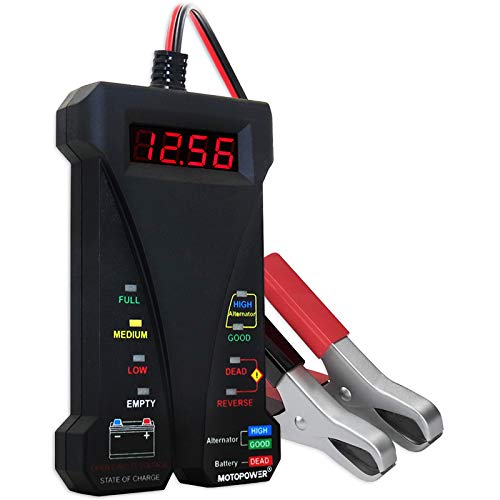
Effortless Operation - Boasting a “plug-and-test” design, there's no need for complex set-up procedures. Just connect it to the battery following simple steps. Without starting the vehicle, you can read the battery status, and after starting, quickly obtain the alternator status. Whether you're a professional mechanic or an ordinary car owner, you can easily use it to quickly determine if the battery needs jump - starting, replacement, or if the alternator output is normal.

Reliable Car Battery Tester:ANENG BT172 automotive battery tester is engineered to test 12V batteries across a variety of vehicles, such as cars, motorcycles, trucks, RVs, ATV, SUV, boats, yachts, mowers, and even golf carts.The accuracy of this car battery voltmeter is approximately 0.01V, ensuring dependable results.

【Reliable Car Battery Tester】: The alternator tester can accurately determine whether the car battery needs to be replaced or if there is a power outage, and at the same time evaluate the output status of the alternator, clearly presents real-time voltage data, battery health and charging status. It can effectively prevent the battery from being damaged due to overcharging or undercharging, and extend the battery's service life.
Conductance Test
Performing a conductance test is a reliable method to assess the health of your car battery without using a multimeter. This test measures the ability of the battery to conduct an electrical current and provides valuable information about its overall condition. Here are four key reasons why conducting a conductance test is crucial:
- Accuracy: Conductance testing provides a more accurate assessment of your battery’s health compared to just checking the voltage. It takes into account various factors such as battery age, temperature, and internal resistance, giving you a more comprehensive picture.
- Alternator Performance: By conducting a conductance test, you can also evaluate the performance of your car’s alternator. A healthy battery should be able to accept a charge from the alternator efficiently. If the battery fails the conductance test, it may indicate a problem with the alternator.
- Battery Terminal Corrosion: Conductance testing can help identify any potential issues with battery terminal corrosion. Corrosion can hinder the flow of electricity, leading to poor battery performance. By detecting this early, you can take appropriate steps to clean or replace the battery terminals and ensure optimal performance.
- Predictive Maintenance: Regular conductance testing allows you to monitor the health of your battery over time. By keeping track of the conductance values, you can identify any gradual decline in performance and plan for battery replacement before it fails completely.
Recommended Products

【12V/24V Battery Tester】KAIWEETS battery tester works with all 12V and 24V batteries with a cold cranking amp (CCA) rating from 50 to 2000, including Standard (Flooded) Battery, EFB, AGM, and GEL battery types. Ideal for cars, motorcycles, trucks, RVs, ATVs, SUVs, boats, yachts, lawn mowers, and golf carts, it provides reliable, fast, and effortless vehicle battery maintenance.
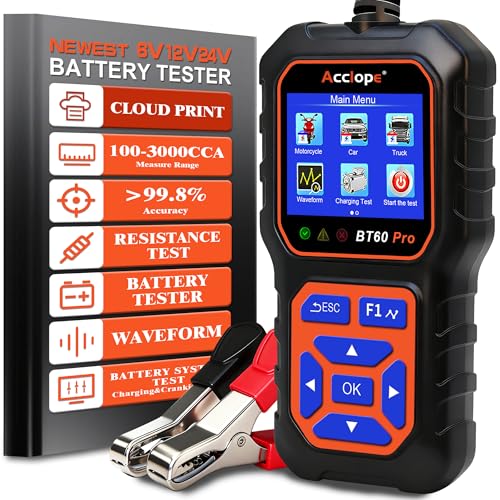
Wide Battery Compatibility: The ACCLOPE BT60 PRO supports 6V, 12V, and 24V batteries, including lead-acid, AGM, GEL, EFB, and lithium batteries. LiFePO4 support is limited to voltage/health checks and does not guarantee precise CCA(100-3000) measurement. The device is not compatible with 48V systems. Battery Tester Only - NOT OBD2 / NOT a Code Reader (Does NOT read/clear DTC). This versatile car battery tester provides reliable diagnostics for professionals and DIY users, making it an essential tool for diverse battery testing needs

❀ Suitable for carbon, , alkaline and rechargeable batteries.
Electrolyte Level Check
By visually inspecting the battery, you can check the electrolyte level and ensure it’s at the optimal range for proper battery function. Maintaining the electrolyte level is crucial for the overall health of your car battery. The electrolyte solution, a mixture of sulfuric acid and distilled water, is responsible for facilitating the chemical reaction that generates electrical energy.
To check the electrolyte level, start by locating the battery in your vehicle. Most batteries have translucent casings, allowing you to see the electrolyte level without opening the battery. The optimal level is usually indicated by two marked lines on the side of the battery. If the electrolyte level is below the lower line, it means the battery needs water. On the other hand, if the level is above the upper line, it’s overfilled and may require the addition of sulfuric acid.
To maintain the electrolyte level, follow these troubleshooting tips. If the level is low, carefully remove the battery caps and add distilled water until the level reaches the lower line. Be cautious not to overfill, as it can lead to electrolyte leakage. If the level is high, you can use a syringe or small tube to remove the excess electrolyte.
Regularly checking and maintaining the electrolyte level is an essential part of battery maintenance. By doing so, you can ensure optimal battery performance and extend its lifespan.
Frequently Asked Questions
How Often Should I Visually Inspect My Car Battery?
To extend car battery life and ensure its health, visually inspect it regularly. Look for signs of a healthy battery, such as clean terminals and no leakage. By doing so, you can prevent unexpected breakdowns and save on costly repairs.
Can a Car Battery Pass a Load Test but Still Have Low Voltage?
You might think a car battery that passes a load test would have decent voltage. But, surprise! It’s possible for a battery to fool you. Load tests don’t always accurately measure voltage.
What Are Some Signs That My Car Battery May Be Failing?
If your car battery is failing, there are warning signs you should look out for. These include dim headlights, slow engine cranking, and a clicking sound when you try to start the car. Use these troubleshooting tips to diagnose the issue.
How Long Does a Car Battery Typically Last?
On average, a car battery typically lasts around three to five years. However, the lifespan can be affected by various factors such as weather conditions, driving habits, and maintenance practices.
Are There Any DIY Methods to Improve My Car Battery’s Health Without Using Specialized Equipment?
You can improve your car battery’s health without specialized equipment by following DIY methods for maintenance and rejuvenation. These techniques will liberate you from relying on multimeters and ensure optimal battery performance.

Evan Armstrong is a lead automotive engineer at Car Troubleshooters with over 15 years of experience in the automotive industry. He has a Master's degree in Automotive Engineering and a deep understanding of how cars work and what it takes to fix them.