
Replacing a BMW battery without programming is feasible for many models. If you follow the correct steps, you can avoid dealership visits while ensuring your vehicle runs smoothly.
Necessary Tools for BMW Battery Replacement
Replacing a BMW battery without programming is a task that can be accomplished with the right tools. Understanding which tools are essential for this process will help ensure a smooth and efficient replacement. This section outlines the necessary equipment you’ll need to successfully complete the battery replacement on your BMW.
Before starting the battery replacement, ensure you have all necessary tools and supplies. Having everything on hand will streamline the process and reduce the risk of mistakes. Here’s a checklist of what you need:
New battery compatible with your BMW model
Wrench set for battery terminals
Safety gloves to protect your hands
Safety goggles to shield your eyes
Multimeter to check battery voltage
| Tool/Supply | Purpose |
|---|---|
| New battery | Replacement |
| Wrench set | Terminal removal and installation |
| Safety gloves | Hand protection |
| Safety goggles | Eye protection |
| Multimeter | Voltage checking |
Recommended Products

BATTERY MAINTENANCE KIT: This kit includes every tool that you'll need to service or change a battery in any vehicle: 4-in-1 terminal cleaner, 10 mm ratchet, battery plier, 5/16 ratchet & battery terminal spreader/cleaner

🏮 Superior Puller Tool: The wiper arm removal tool we are designed with heavy-duty craftsmanship, made of high hardness carbon steel, with superior high temperature resistance and anti-rust excellent performance, which can withstand the working environment under high pressure, providing you with a reliable automotive repair tool!

【Package Includes】:This car battery terminal bolt contains 4 T-bolt kits, each kit consists of bolts, nuts, and washers. It can meet your replacement needs.
Battery Replacement Preparation Steps for BMW
Before replacing the battery in your BMW, it’s essential to prepare adequately to ensure a smooth process. This section outlines the necessary steps to take before beginning the replacement, including gathering tools, understanding safety precautions, and checking compatibility with your specific model. Proper preparation can help avoid complications and make the task more manageable.
Preparation is crucial when replacing a battery. Start by ensuring your vehicle is parked on a flat surface and the ignition is turned off. Open the hood and locate the battery.
Disconnect the negative terminal first to prevent any electrical shorts. Use a wrench to loosen the terminal clamp and carefully remove it. Next, disconnect the positive terminal in the same manner.
Always handle the battery with care. If the battery is leaking or damaged, dispose of it properly at a recycling center.
Safely Remove BMW Battery from Bracket
Removing the battery from a BMW can seem daunting, but with the right approach, it can be done safely and efficiently. This section will guide you through the necessary steps to detach the battery from its bracket, ensuring you avoid common pitfalls and protect your vehicle’s components during the process.
Once the terminals are disconnected, it’s time to remove the old battery. Most BMW batteries are secured with a bracket or strap. Use your wrench to remove any bolts holding the battery in place.
Carefully lift the battery out of the tray. Batteries can be heavy, so use proper lifting techniques to avoid injury.
If the battery is stuck, check for any additional securing mechanisms that may need to be loosened.
Recommended Products

This oil drain plug wrench with 17 mm box end and 14 mm hex driver makes it easy to work on drain plugs on German vehicles using 17 mm oil drain plug and 14 mm transfer case and differential drain plugs

High Quality: A ABIGAIL oil filter wrenches are forged from high quality 6061 T5 aluminum, which can bear tremendous pressure when you unscrew the extremely tight Toyota oil filter caps. and the surface is treated with a high quality black anodized finish to prevent corrosion.

REVERSIBLE RATCHET ACTION: The Performance Tool W1674 Side Terminal Battery Wrench features a reversible ratchet action for easy removal and installation of side terminal battery bolts.
Install the New Battery Correctly
Installing a new battery in your BMW can seem daunting, especially when programming is often required. However, it is possible to replace the battery without complex coding. This section will guide you through the correct steps to ensure a seamless installation, allowing you to get your vehicle back on the road efficiently.
With the old battery removed, place the new battery into the tray. Ensure it is oriented the same way as the old battery. Secure it with the bracket or strap you removed earlier.
Next, connect the positive terminal first. Slide the terminal clamp over the positive terminal and tighten it with your wrench. Repeat the process for the negative terminal.
This order is essential to prevent sparks during the connection process.
Recommended Products
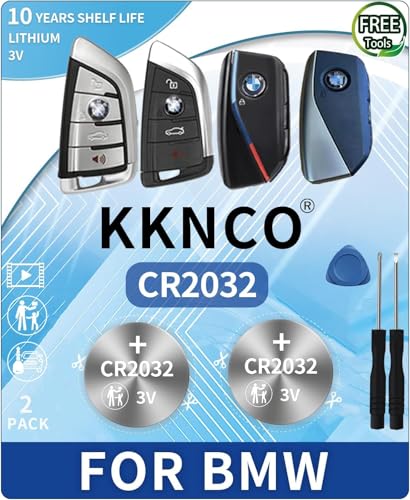
PACKAGE INCLUDED : Two (2) CR2032 Remote Fob Battery and 3Pcs Opening/Pry Tools , Five item bundle (total 5pcs) , (Refer to product images to confirm compatibility)

Lithium Coin Battery: Duracell's 2450 3V coin batteries provide reliable, long lasting power for your medical devices, security devices, electronics and more.

【Bluetooth OBD2 Scanner Designed for BMW】The ANCEL BD300 is a cost-effective obd2 scanner diagnostic tool designed for BMW/MINI/Rolls-Royce owners. It offers full coverage for BMW series (1-8, X, Z, i, M ) , Mini Cooper/Clubman/Countryman Series and Rolls-Royce (2002+). Except for BMW-group vehicles, it’s compatible with all OBD2-equipped vehicles (1998+) featuring 16-pin connectors—supporting 60+ brands (US/EU/Asia) and 10,000+ models. Supports 6 user-selectable languages (Chinese, English, German, French, Spanish, and Italian), making it easy to operate no matter where you’re from.
Check New Battery Voltage Levels
Before installing a new battery in your BMW, it’s essential to check its voltage levels to ensure optimal performance. A new battery should typically show a voltage between 12.4 and 12.7 volts. This step helps confirm that the battery is fully charged and ready for installation, preventing potential issues down the line.
After installation, it’s crucial to verify that the new battery is functioning correctly. Use a multimeter to check the voltage. A fully charged battery should read around 12.6 volts or higher.
If the voltage is lower, ensure all connections are tight and secure. If issues persist, consider checking the alternator or other electrical systems.
BMW Battery Programming Requirements Explained
Understanding the battery programming requirements for BMW vehicles is crucial for anyone considering a battery replacement. While many car batteries can be swapped without additional steps, BMW models often have specific protocols that need to be followed to ensure optimal performance. This section will clarify what is necessary for a successful battery replacement without the need for programming.
Some BMW models require battery programming after replacement to ensure the vehicle’s systems recognize the new battery. This programming is typically necessary for models equipped with advanced energy management systems.
Check your model’s specifications to determine if programming is needed. If programming is required, you can use a diagnostic tool or visit a professional mechanic.
Post-Battery Replacement Troubleshooting Tips
After replacing the battery in your BMW, you may encounter some issues that require attention. This section provides essential troubleshooting tips to help you address common problems that can arise post-replacement, ensuring your vehicle operates smoothly without the need for programming. Understanding these steps can save you time and prevent potential complications.
If you encounter problems after replacing the battery, consider these common issues:
Battery not holding charge: Check for parasitic drain or faulty alternator.
Electrical systems malfunctioning: Inspect connections and fuses.
Warning lights on dashboard: May indicate a need for programming or other issues.
| Issue | Possible Cause | Solution |
|---|---|---|
| Battery not holding charge | Parasitic drain | Inspect electrical systems |
| Electrical systems failing | Loose connections | Tighten and secure connections |
| Warning lights illuminated | Need for programming | Use diagnostic tool |
Post-Replacement Battery Disposal and Closure
After successfully replacing your BMW battery, it’s important to consider the proper disposal of the old battery and the steps for closing up your vehicle. This section will guide you through environmentally responsible disposal methods and ensure that your car is securely reassembled, maintaining its performance and safety.
After confirming that everything is functioning correctly, close the hood securely. Dispose of the old battery at a recycling facility.
Regular maintenance checks on your battery can prevent future issues. Monitor the battery’s performance and voltage periodically to ensure longevity.
Replacing a BMW battery without programming is possible and can save you time and money. Follow these steps for a successful installation.

Evan Armstrong is a lead automotive engineer at Car Troubleshooters with over 15 years of experience in the automotive industry. He has a Master's degree in Automotive Engineering and a deep understanding of how cars work and what it takes to fix them.