
Are you wondering how to keep your Chevrolet Bolt charged and ready for the road? You’re not alone. Many new electric vehicle owners face the challenge of figuring out the best ways to charge their cars efficiently.
Imagine you’re planning a weekend getaway, but you’re unsure if your Bolt has enough juice to get you there. This article will guide you through the charging process, from home charging setups to public stations, ensuring you can hit the road with confidence. By the end, you’ll know exactly how to keep your Bolt powered up and ready for any adventure.
Key Takeaways
- Chevrolet Bolt Overview: Understand the Bolt’s key features, including its 66 kWh battery, which provides a range of up to 259 miles, making it ideal for daily commutes and road trips.
- Charging Methods: Familiarize yourself with three charging options: Level 1 (120V outlet), Level 2 (240V outlet), and DC Fast Charging, each offering different charging speeds to suit various needs.
- Home Charging Setup: Installing a Level 2 charger at home can greatly reduce charging time, allowing for efficient overnight recharges and increased convenience for daily use.
- Public Charging Awareness: Utilize charging apps like PlugShare or ChargePoint to locate nearby charging stations, especially when planning longer trips to ensure access to fast charging options.
- Battery Maintenance Tips: Regularly charge your Bolt before dropping below 20% and limit the use of DC Fast Charging to protect battery health over time, ensuring optimal performance.
- Optimal Charging Times: To save on electricity costs, charge your vehicle during off-peak hours, typically late at night or early in the morning, when electricity rates may be lower.
Understanding The Chevrolet Bolt
The Chevrolet Bolt is a compact electric vehicle designed for efficiency and practicality. It combines a spacious interior, advanced technology, and impressive range to meet your daily driving needs.
Overview Of The Chevrolet Bolt Features
- Battery Capacity: The Bolt features a 66 kWh battery that provides a range of up to 259 miles on a full charge, eliminating range anxiety for most trips.
- Performance: With 200 horsepower, the Bolt accelerates quickly and handles well, making it suitable for city and highway driving.
- Infotainment System: The Chevrolet Infotainment 3 system includes a 10.2-inch touchscreen with Apple CarPlay and Android Auto compatibility, enhancing connectivity and navigation.
- Safety Features: Standard safety features include lane departure warning, forward collision alert, and automatic emergency braking, promoting safer driving.
- Cargo Space: The Bolt offers 16.6 cubic feet of cargo space behind the rear seats, expandable to 57 cubic feet with the seats down, making it practical for various needs.
Importance Of Proper Charging
Proper charging practices are vital for maintaining battery health and maximizing performance.
- Avoid Deep Discharges: Regularly charging the Bolt before it reaches a low battery level helps extend battery life. Keeping the charge above 20% is recommended.
- Home Charging Setup: Installing a Level 2 home charger significantly reduces charging time, providing you more convenience.
- Using Public Charging Stations: Familiarize yourself with nearby public charging networks for road trips. Many stations offer fast charging, which can restore up to 100 miles of range in about 30 minutes.
- Regular Updates: Keeping your Bolt’s software updated ensures optimal charging performance and access to new features.
By following these guidelines, you can keep your Chevrolet Bolt charged and ready for every journey.
Charging Options For The Chevrolet Bolt
Charging your Chevrolet Bolt involves various options that cater to different needs and scenarios. Understanding these options helps you keep your vehicle ready for any journey.
Recommended Products

❤ [Equipped with Nema 14-50 plug 240V, Compatible with 110-120V Nema 5-15p to 14-50r EV Adapter(Not packaged) or the other EV Adapter Cable]: Suggest install the 240V Nema 14-50 plug-in socket. [Kindly Note When Using the 5-15P Adapter]: 1. The RV Adapter cable doesn't work for EV chargers, please order the correct EV adapter cable. 2. It will become slow level 1 ev charging and some cars may drop to 12A, the max charging rate is 1.32-1.8kW(110V*12A-120V*15A).

⚡ Fast, Flexible Charging You Control- Equipped with a NEMA 14-50 plug and adjustable current (10A to 40A), the EVDANCE EV Charger gives you total control over your charging speed. Whether you're topping off at work or doing an overnight charge at home, simply tap the control button to select your ideal amperage. It’s precision charging, made easy NOTE: It is necessary to use a J1772 to Tesla adapter(not including) when charging your Tesla vehicles

[Up to 9x Faster Charging Speed]: Provides up to 46 miles/hour charging speed via hardwired connection (48 amp - up to 9x faster than a standard wall outlet) or up to 38 miles/hour via the NEMA 14-50 plug (40 amp). Professional installation recommended for optimal safety and performance. [Install The Power Outlet Cord]: No smaller than 8AWG if charge 40-48A, we suggest 6AWG cord.(1.The input side is belongs to the electrician electric automobile regulation scope, need to use three 6AWG cable wires for 48A; 2.The charging cable belongs to the automotive connector certification standard, so the 8AWG cable can meet the 48A.)
Level 1 Charging
Level 1 charging utilizes a standard 120-volt household outlet. This method is convenient but slow. You can plug the charging cable that came with your Bolt directly into the outlet. This option is suitable for overnight charging, adding roughly 4-5 miles of range per hour. If your daily commute is short, Level 1 might be sufficient for your needs.
Level 2 Charging
Level 2 charging employs a 240-volt outlet, significantly faster than Level 1. This method typically delivers about 25 miles of range per hour. Installing a Level 2 home charging station provides a more efficient solution for daily charging. You can schedule charging at night or during off-peak hours to save on costs. Public Level 2 chargers are also widely available, making them a great option for longer trips.
DC Fast Charging
DC Fast Charging offers the quickest option for top-ups. These stations provide high power output, allowing you to recharge up to 80% in around 30 minutes. Most DC fast chargers are located along major highways, ensuring you can quickly recharge during road trips. While beneficial for long-distance travel, it’s essential to limit DC fast charging sessions to maintain battery health over time.
How To Charge A Chevrolet Bolt
Charging a Chevrolet Bolt is straightforward, offering several methods to keep your electric vehicle ready for the road. Familiarize yourself with these options to optimize your charging experience.
Recommended Products

[Up to 8x Faster Charging Speed]: Provides up to 38 miles/hour charging speed via the NEMA 14-50 plug (40 amp). Professional installation recommended for optimal safety and performance. [Install The Power Outlet Cord]: No smaller than 8AWG if charge 40-48A, we suggest 6AWG cord.(1.The input side is belongs to the electrician electric automobile regulation scope, need to use three 6AWG cable wires for 48A; 2.The charging cable belongs to the automotive connector certification standard, so the 8AWG cable can meet the 48A.)

❤ [9X FASTER Than Portable Level 1 EV Charger, Equipped with Nema 14-50 plug, Install The 6AWG Power Outlet Cord]: Provides up to 46 m/h charging speed via hardwired connection (48 amp) or up to 38 m/h via the NEMA 14-50 plug (40 amp). Professional installation recommended for optimal safety and performance. (1.The input side belongs to the electrician electric automobile regulation scope, need to use three 6AWG cable wires for 48A; 2.The charging cable belongs to the automotive connector certification standard, so the 8AWG cable can meet the 48A.)
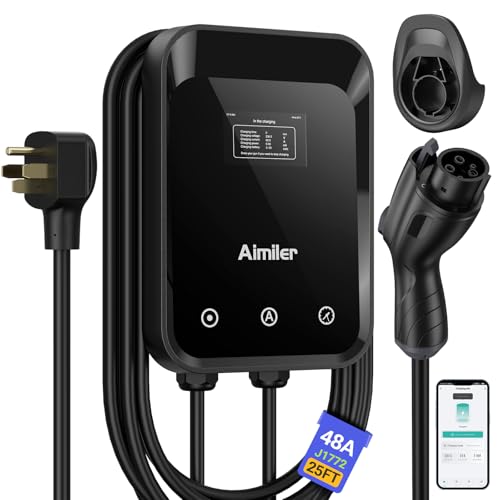
[9X FASTER Than Portable Level 1 EV Charger, Equipped with Nema 14-50 plug, Install The 6AWG Power Outlet Cord]: Provides up to 46 m/h charging speed via hardwired connection (48 amp) or up to 38 m/h via the NEMA 14-50 plug (40 amp). Professional installation recommended for optimal safety and performance. (1.The input side belongs to the electrician electric automobile regulation scope, need to use three 6AWG cable wires for 48A; 2.The charging cable belongs to the automotive connector certification standard, so the 8AWG cable can meet the 48A.)
Finding A Charging Station
Locating a charging station can enhance your travel convenience. Use apps like PlugShare or ChargePoint to find nearby stations. Look for publicly accessible fast chargers along your intended routes. Many stations provide real-time availability and can help you plan stops efficiently. Ensure the chosen station is compatible with your vehicle.
Using The Onboard Charger
Your Chevrolet Bolt comes equipped with an onboard charger that simplifies the charging process. Connect the charging cable to your Bolt and plug the other end into a power source. When charging, check the light indicators on the dashboard—green means charging is happening, while flashing lights show recharge progress. At home, consider installing a Level 2 charger for faster recharges each night.
Understanding Charging Cables
Understanding the types of charging cables available helps maximize charging efficiency. Use the Level 1 cable for standard 120-volt outlets; it’s helpful for overnight charging but slow, adding roughly 4-5 miles of range per hour. For quicker recharges, utilize the Level 2 cable with a 240-volt outlet, adding around 25 miles per hour. Familiarize yourself with the DC fast charging cord; it replenishes about 80% of your battery in 30 minutes, perfect for long trips. Always check compatibility with your charging station before connecting.
Tips For Efficient Charging
Charging your Chevrolet Bolt efficiently helps maximize battery life and driving range. Follow these tips to make the most of your charging practices.
Recommended Products

PLUG-IN, NO ELECTRICIAN: EVIQO Level 2 EV charger with a max output of 40A on a dedicated 50A / 240V circuit fully recharges most EVs overnight. This wall-mounted plug-in model requires an EV-graded 4-prong NEMA 14-50 outlet (same style as an RV or range outlet - NOT a dryer outlet). Verify your vehicle's connector type and home electrical setup before ordering.

HARDWIRED, ELECTRICIAN REQUIRED: EVIQO Level 2 EV Charger delivers up to 48A output on a dedicated 60A / 240V circuit, fully recharging most EVs overnight. Licensed electrician installation required (per National Electrical Code). Need more power? Set up DIP switches to positions 4 & 5 to unlock 50A output - requires a dedicated 70A circuit. Verify your vehicle's connector type and home electrical setup before ordering.

PLUG-IN, NO ELECTRICIAN: EVIQO Level 2 EV charger with a max output of 40A on a dedicated 50A / 240V circuit fully recharges most EVs overnight. This wall-mounted plug-in model requires an EV-graded 4-prong NEMA 14-50 outlet (same style as an RV or range outlet - NOT a dryer outlet). Verify your vehicle's connector type and home electrical setup before ordering.
Optimal Charging Times
Charge your Bolt during off-peak hours to save on electricity costs. Utilities often offer lower rates during late night or early morning hours. Aim to start charging after 10 PM or before 7 AM. When using public charging stations, early morning or mid-afternoon times often see less congestion.
Battery Maintenance Tips
Maintain your battery health by following a few simple practices.
- Regular Charging: Charge before the battery level drops below 20%. This habit prevents battery stress.
- Avoid Frequent DC Fast Charging: Use DC Fast Charging only for long trips or emergencies. Frequent use can degrade battery capacity over time.
- Keep the Battery Cool: Park in shaded areas or a garage when possible. Extreme heat can harm battery efficiency.
- Update Software: Keep your Bolt’s software updated, ensuring you benefit from the latest efficiency improvements.
Implementing these strategies keeps your Chevrolet Bolt ready for every journey while promoting battery longevity.
Conclusion
Charging your Chevrolet Bolt doesn’t have to be a hassle. With the right knowledge and tools you can ensure your EV is always ready for the road. Whether you choose to charge at home or take advantage of public stations you’ve got options that fit your lifestyle.
Remember to keep an eye on your battery level and consider charging during off-peak hours to save on costs. By following the tips shared you’ll not only extend your battery’s life but also enjoy the full benefits of your Bolt’s impressive range. Happy driving!
Frequently Asked Questions
What charging options are available for the Chevrolet Bolt?
The Chevrolet Bolt offers three main charging options: Level 1 (120-volt outlet), Level 2 (240-volt outlet), and DC Fast Charging. Level 1 is slow and adds about 4-5 miles of range per hour, while Level 2 adds around 25 miles per hour. DC Fast Charging provides the quickest option, recharging up to 80% in about 30 minutes, ideal for long trips.
How often should I charge my Chevrolet Bolt?
It’s best to charge your Chevrolet Bolt regularly, ideally before the battery level drops below 20%. This practice helps maintain battery health and ensures you’re always ready for your next journey.
Can I charge my Bolt overnight?
Yes, you can charge your Chevrolet Bolt overnight using a Level 1 charger or, preferably, a Level 2 charger for faster charging. This is convenient and ensures your car is fully charged in the morning.
How does charging affect battery health?
To maintain battery health, limit the use of DC Fast Charging and avoid letting the battery level fall too low. Regular charging and keeping the battery cool are also essential for longevity.
Are there apps to help find charging stations?
Yes, apps like PlugShare and ChargePoint can help you locate nearby charging stations. They often provide information about station availability and compatibility, making planning easier.
Is it cost-effective to charge during off-peak hours?
Charging your Chevrolet Bolt during off-peak hours can save on electricity costs, as electricity rates are typically lower during these times. It’s a great way to be more economical.
What features make the Chevrolet Bolt a good choice?
The Chevrolet Bolt features a 66 kWh battery with a range of up to 259 miles, 200 horsepower for quick acceleration, a user-friendly infotainment system, and essential safety features. These elements enhance its appeal as an electric vehicle.

Ben Wilkinson is a an experienced mechanic with over 10 years of experience in the automotive repair industry. He is highly skilled in diagnosing and repairing a wide range of car-related issues, from basic maintenance tasks to more complex repairs.